514-820-0773In stock in Quebec · 20+ years of experience · Online quotes
NaturalPremiumVisible elements

Solid wood: authenticity, character and limits to know

Solid wood is wood taken directly from the log — full boards, as opposed to composite panels. Prized for its grain and visual depth, it is a living material: its behaviour depends on the context, the finish and where it is used.

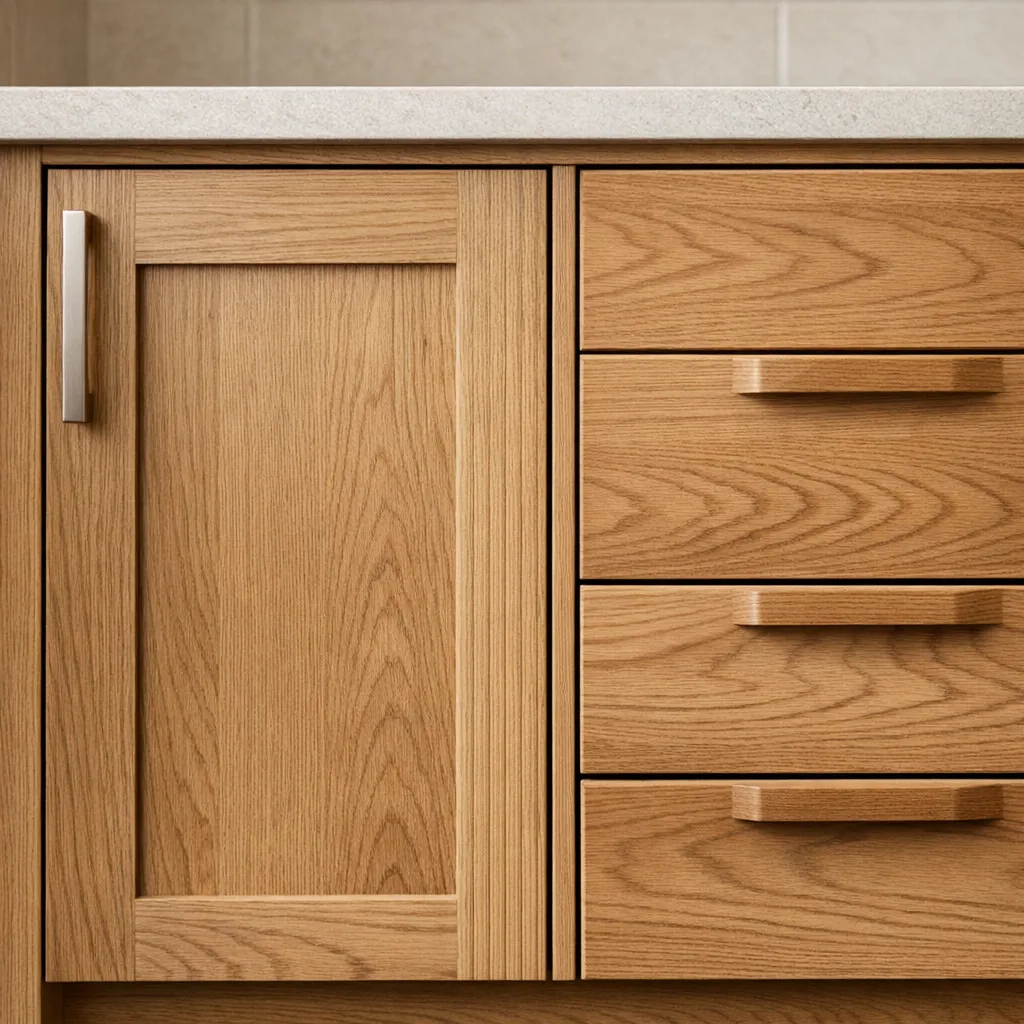
Custom kitchen with solid wood details

The real point isn't solid wood everywhere, but solid wood in the right place

What solid wood really brings

Solid wood stands apart from MDF, melamine, plywood and veneer through its full material body and natural variations. It brings warmth, depth and perceived value, but calls for more careful design.

Natural aesthetics

Grain, tone and texture give a more lively result.

High perceived value

It reinforces the high-end feel on visible elements.

Possible repairability

Some marks can be reworked depending on the chosen finish.

Stability constraint

Its behaviour varies with humidity, temperature and design.

Where solid wood is most relevant

Solid wood is often optimal on visible elements where the look, the feel and the perception of quality matter most.

DoorsFrontsDetails
A good fit for this material
  • 1Doors and fronts
  • 2Decorative details
  • 3Selected pieces with high visual value
  • 4Projects where a natural character is sought

Limits and points to watch

Durability does not come from the material alone. It also depends on the finish, the hardware and the installation.

  • Natural movement. Wood can react to humidity and temperature.
  • Large surfaces to assess. Some areas need more stability than solid wood can offer.
  • Maintenance depending on the finish. The result and the upkeep change with the chosen protection.
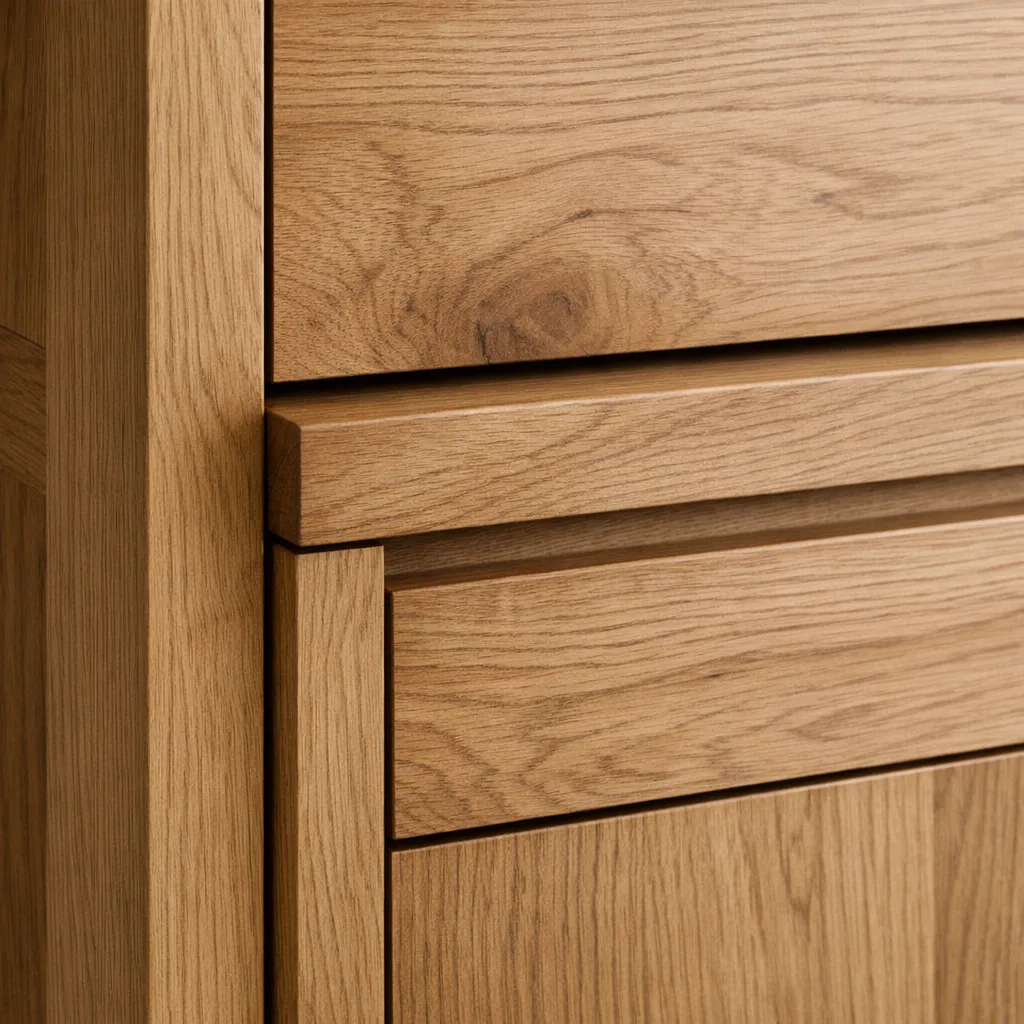
Solid wood finish detail
Recommended approach
Solid wood is often better combined with more stable panels on certain structures.

FAQ - Solid wood

No. Solid wood is beautiful for aesthetics — grain, depth, perceived value — and excellent on doors and visible elements. But it's a living material that moves with humidity; on large flat surfaces or in demanding environments, engineered panels (plywood, MDF) sometimes offer more stability. The most coherent strategy targets solid wood where it's seen and touched.

Yes, often for doors and visible elements. The choice depends on the finish, the maintenance and the environment.

Solid wood reacts to humidity: it can swell, contract or warp with the room's humidity variations. Good design (planned clearance, suitable joinery), a finish that seals the wood and proper use clearly limit these movements. That's why it's often used in a targeted way, combined with more stable panels on the structures.

Yes. It is often the most coherent approach: solid wood on visible elements, more stable panels on certain structures.

Want to use solid wood the right way?

We help you choose where it brings real value, and where other materials will be more coherent technically.

What our clients say

Rated 5 out of 5 — 11 Google reviews
  • « Excellent contracteur. Ils ont fait mes planchers et autres projets et nous sommes très satisfaites. Je recommande 100%. »
    Mélina Desbiens
  • « L'expérience client au cœur des services de Dilamco Construction ! »
    Jean-Philippe Hébert