Checks and permit
- We read the required setbacks and the allowed height
- We survey the foundation, the structure and the services
- The engineer's sealed drawings go with the application
We check the zoning, have the drawings made, pour the foundation and tie the new space into your house.
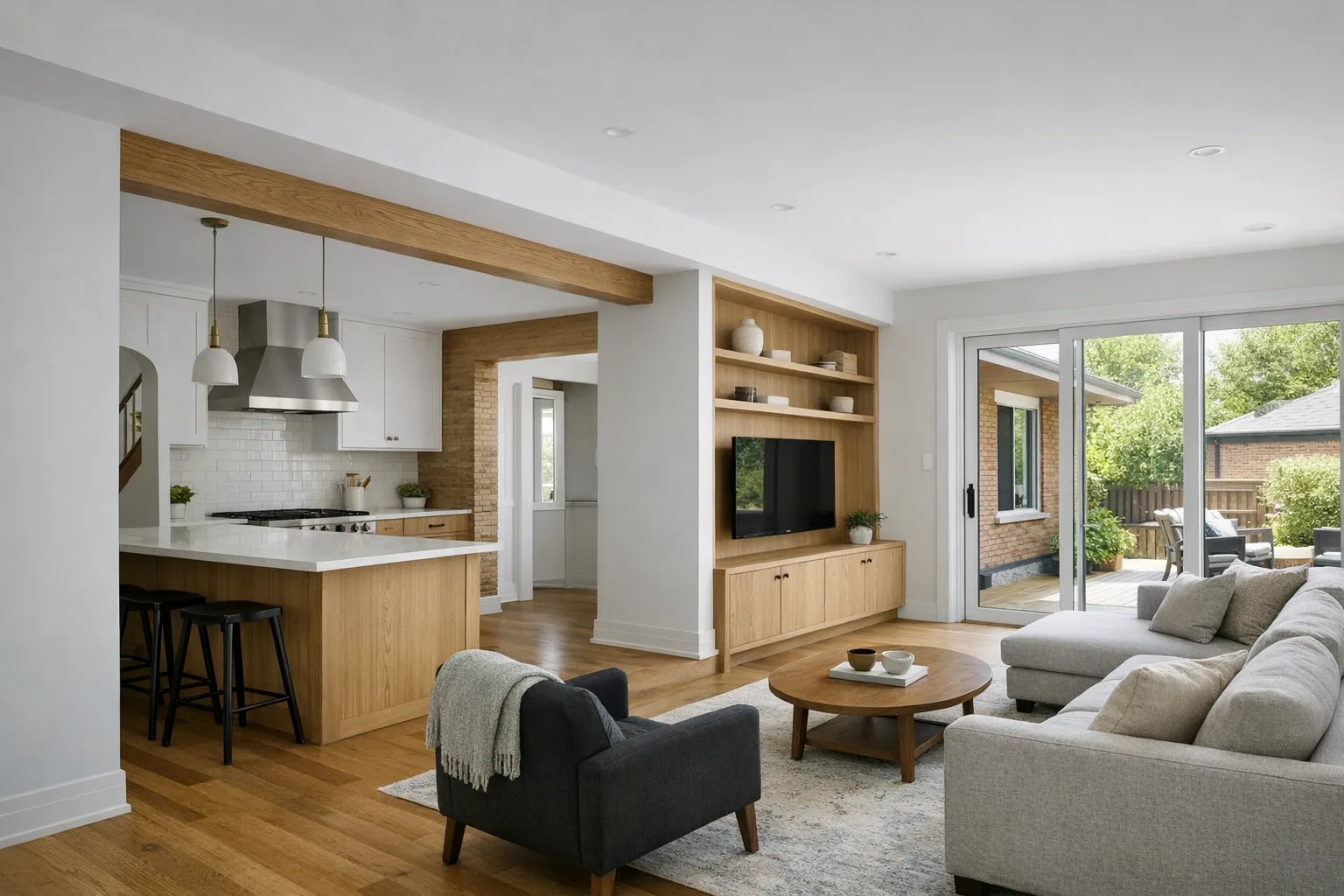
Additions in the West Island and Laval
We read the zoning and the location certificate to see what is allowed.
An engineer calculates the loads and seals the construction drawings.
We file with the city and sign the schedule with you.
We dig, pour the foundation, raise the framing and the roof.
We extend the services, have it inspected, then finish the walls.
Your city's zoning and the size of the lot decide what is possible.

We start by reading the zoning and the foundation to see what is allowed at your address.
« Excellent contracteur. Ils ont fait mes planchers et autres projets et nous sommes très satisfaites. Je recommande 100%. »
« L'expérience client au cœur des services de Dilamco Construction ! »